Regulation
BACS explained: what the 2026 building automation rules mean for you
From January 2026, larger non-residential buildings must continuously monitor and optimize their installations. Here is what BACS requires, who it applies to and how to get ready.
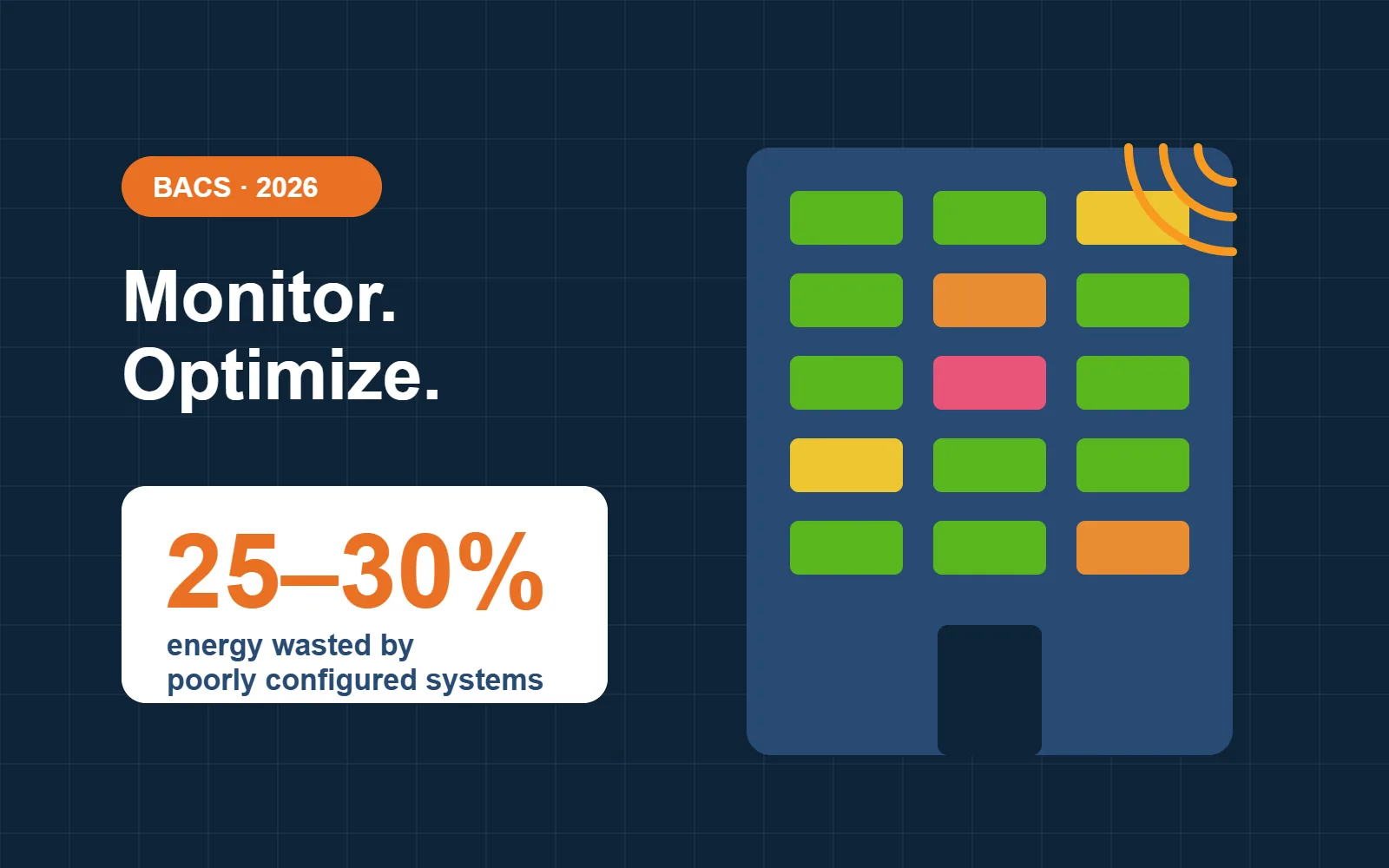
Most buildings were never designed to tell you how they are performing. Heating, cooling and ventilation run on fixed schedules and central settings, and problems surface only when someone complains. BACS changes that for a large share of non-residential buildings in Europe.
What is BACS?
BACS stands for Building Automation and Control Systems. The requirement comes from the EU Energy Performance of Buildings Directive. Buildings in scope must have systems that continuously monitor, log and analyze energy use, and that automatically adjust installations where needed.
Why is it required?
A building can look fine on paper while individual rooms are over-ventilated, under-ventilated or heated when nobody is there. Without continuous data, that waste stays invisible. BACS makes sure you see what is happening in real time, and that the building responds automatically.
Does this apply to my building?
BACS is mandatory for non-residential buildings with large HVAC systems. That includes:
- Offices
- Schools
- Warehouses
- Hospitals
- Hotels
- Sports facilities
Key dates
How to get ready without rebuilding your HVAC
Meeting BACS does not have to mean replacing installations. A practical route is to add an intelligence layer on top of what you already have:
- Measure every room. Wireless sensors track CO2, temperature and humidity where people actually work.
- Analyze continuously. Software spots over- and under-ventilation, wasted runtime and maintenance issues.
- Adjust automatically. Setpoints are updated on your existing HVAC, with or without a BMS.
- Report and verify. Before-and-after data proves the effect and supports your compliance reporting.
Key takeaways
- BACS requires continuous monitoring and automatic optimization of building installations.
- It applies to non-residential buildings with large HVAC systems, from January 1, 2026.
- You can comply by adding room-level monitoring and automatic control to your existing HVAC.
This article is general information, not legal advice. Check the national implementation in your country for exact requirements.