Health
Why stuffy meeting rooms cost you focus, and how to fix them
CO2 builds up fast when a room is full. Learn what the numbers mean, why it matters for health and concentration, and how to fix it without wasting energy.
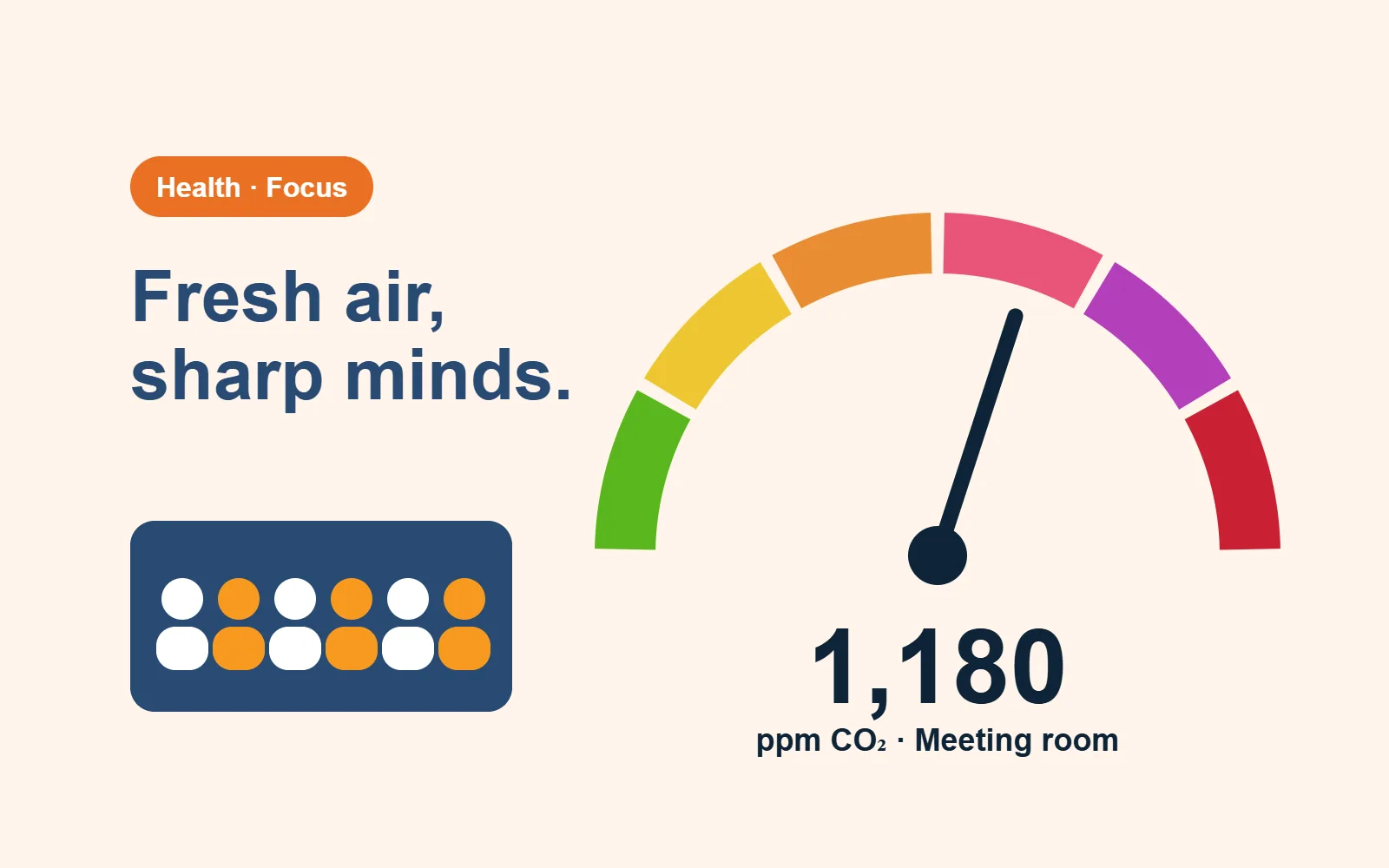
Everyone knows the feeling. An hour into a meeting, the room feels heavy, people get restless and the discussion loses its edge. Often the cause isn't the agenda. It's the air.
CO2 is a signal for fresh air
Every person in a room breathes out CO2. When ventilation can't keep up with the number of people, the level climbs. Because CO2 rises together with other pollutants people release, it is a reliable indicator of how fresh the air really is.
What the numbers mean
Why it matters
Why more ventilation everywhere isn't the answer
The quick fix is to turn ventilation up for the whole building. But that wastes energy on empty rooms and corridors, while the busy meeting room may still not get enough. The problem is local, so the fix should be too.
Example
In a meeting room, Nomestic opened the outdoor-air damper from 18% to 38% only during occupied hours. CO2 returned to a good level, with no extra ventilation for the rest of the floor.
How to fix it
- Measure per room. Put a CO2, temperature and humidity monitor in every occupied space, not one per floor.
- Find the pattern. Look at when and where CO2 peaks. It usually follows bookings and occupancy.
- Ventilate where people are. Increase fresh air in busy rooms automatically, and scale back in empty ones.
Key takeaways
- CO2 is a practical measure of how fresh indoor air is.
- Busy rooms can move from good to unhealthy within one meeting.
- Room-level, automatic ventilation keeps air healthy without wasting energy.