Technology
From physics-based indoor air quality models to time-series climate intelligence
Physics-based models explain how pollutants move through buildings, but real buildings are never steady. Why teams are moving to time-series climate intelligence.

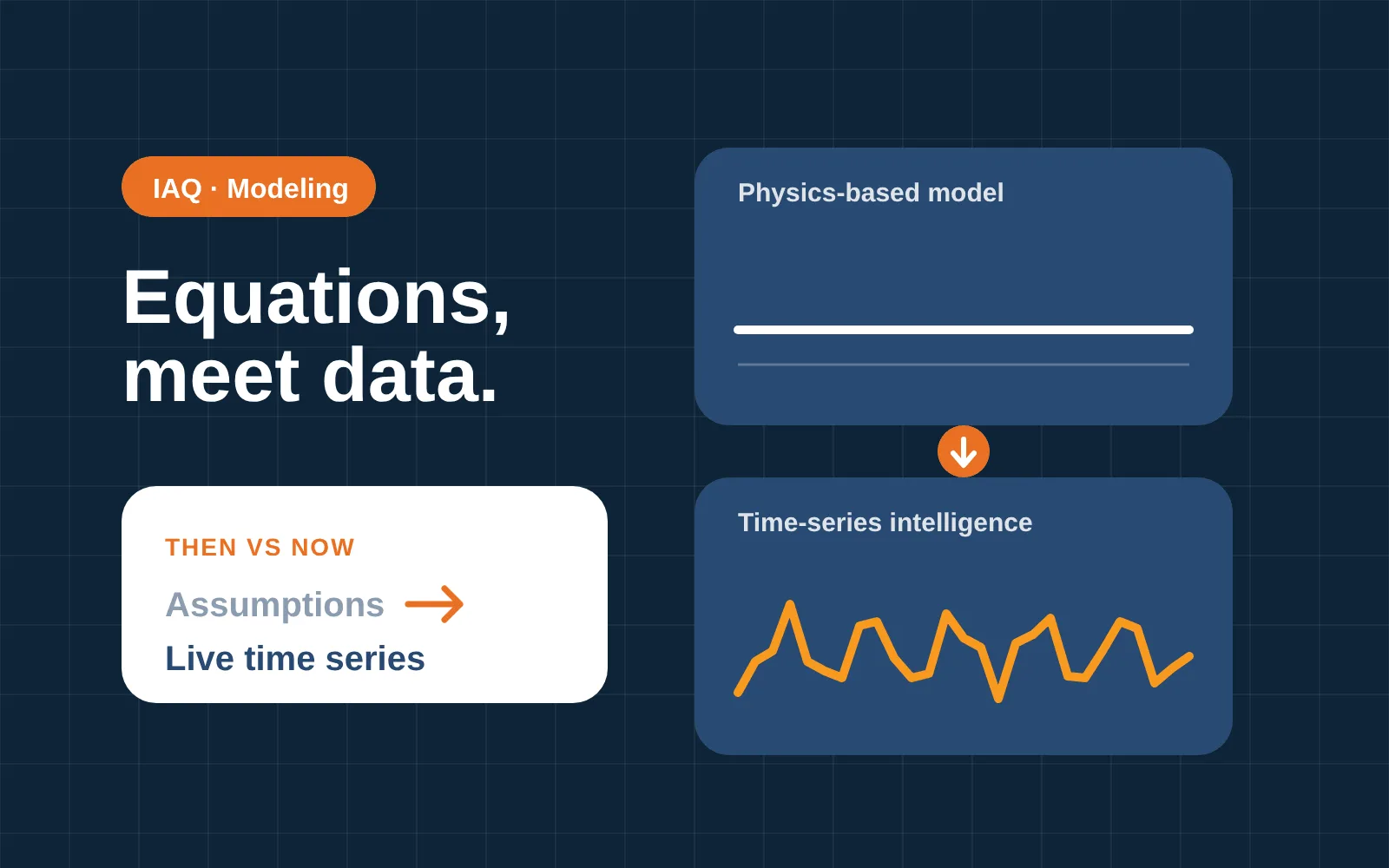
For years, physics-based models have helped engineers understand how pollutants move through buildings, how ventilation dilutes contaminants and how filtration improves the air. They are still a solid foundation for design and HVAC analysis.
Real buildings do not behave that neatly. Occupancy changes every hour, outdoor air quality shifts during the day, ventilation systems do not always do what they should, filters age and rooms get used differently. The same HVAC system can also perform very differently from one room to the next.
Where physics-based models fall short
These models explain the relationship between pollutant sources, outdoor air, airflow and filtration. But many of them rest on assumptions that are hard to keep true in daily operation. They often assume stable conditions in a building that is never stable, and they need inputs that are difficult to measure accurately, such as pollutant generation rates, ventilation effectiveness and how the building is actually run. They explain the theory well and reflect operational reality less well.
Time-series climate intelligence
More building teams now use time-series analysis instead. Rather than leaning on fixed assumptions, a time-series approach learns from what happens over time. It uses historical and live data to understand changing indoor conditions, how rooms behave, how systems respond and which patterns repeat.
That tells a team how indoor air quality changes across the day, which rooms keep underperforming, where ventilation is excessive and where HVAC runtime wastes energy. The question changes from "what should happen according to the model?" to "what is this building actually doing?"
From monitoring to action
Many solutions stop at a dashboard. They show CO2, temperature, humidity, PM2.5, PM10 or TVOC and leave the building team to interpret it. The value comes when the data turns into action: spotting issues early, finding likely causes, showing which rooms need attention, recommending what to do next and checking that the fix worked.
Where Nomestic fits
Nomestic combines room-level sensing, predictive analytics, workflows, control, verification and reporting to find ventilation problems, point to likely causes and turn them into clear actions. It deals with under- and over-ventilated rooms, unnecessary HVAC runtime and unstable control, and it works without mandatory BMS integration, which makes rollout across an existing portfolio faster and more practical.
The result is healthier indoor environments, fewer comfort complaints, proactive maintenance, better ESG and compliance support and reduced HVAC energy consumption.