Technology
Why predicting indoor air quality is not enough for modern offices
A forecast of CO2 or particulate spikes helps, but it does not tell a building what to do next. Why modern offices need decisions as well as predictions.

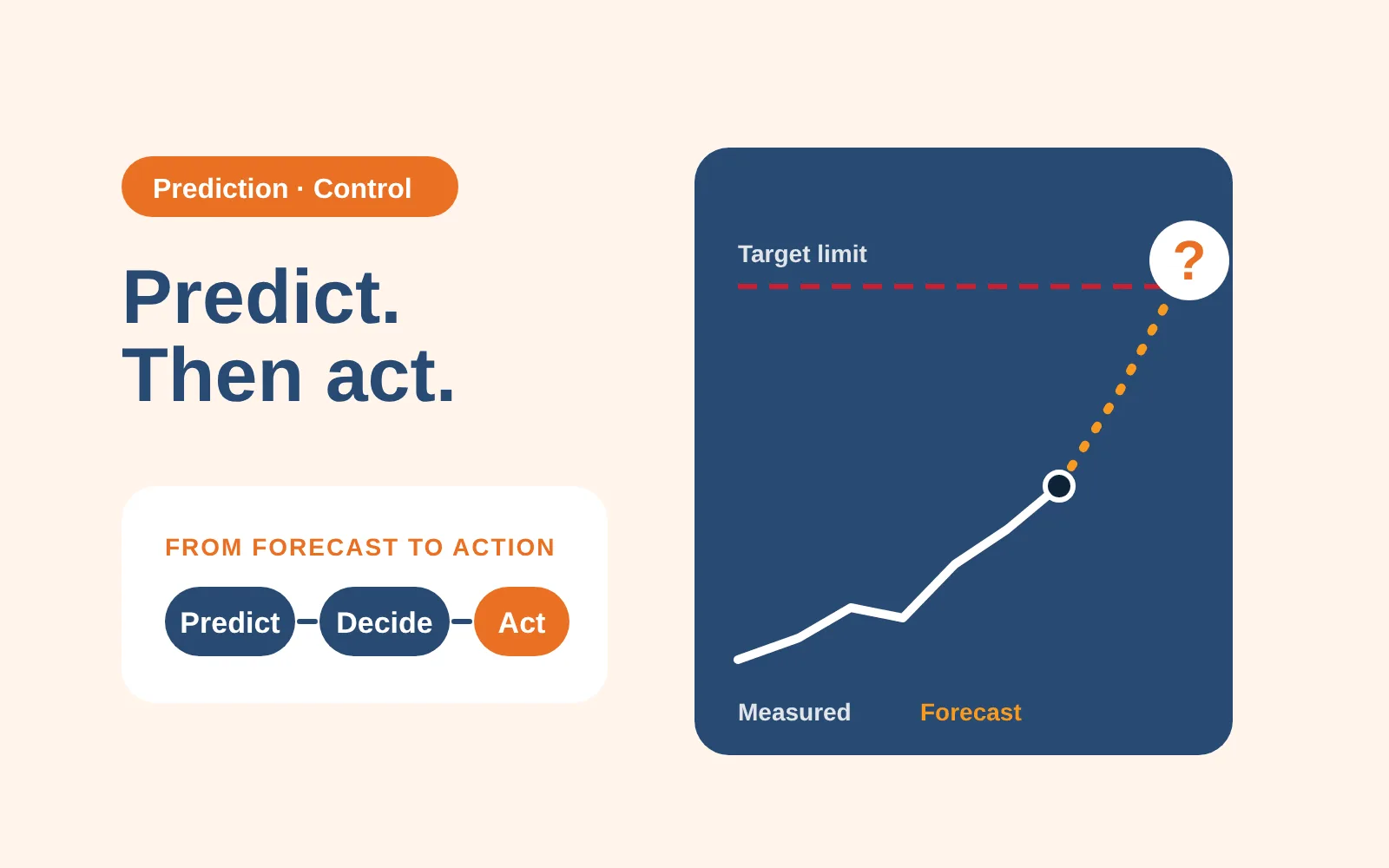
Predicting indoor air quality is useful, but it does not tell a building what to do. A system might forecast a CO2 spike in a meeting room, higher particulate levels from outdoor pollution or more ventilation demand later in the day. That early warning helps. The question it leaves open is what the building should do next.
A forecast is not a decision
Offices change by the hour: occupancy, outdoor air quality, the weather, and HVAC systems that do not always do what you expect. If a room is likely to go over its CO2 target, should the system bring in a little more outdoor air, a lot more, or none because the air outside is bad? A rule like "if CO2 is high, increase ventilation" is too blunt. It ignores the trade-off between indoor air quality, comfort and energy use.
Where a Markov Decision Process helps
A Markov Decision Process (MDP) is a framework for choosing the best action in a changing environment. It picks what to do now from the current state, the available actions and the expected long-term result.
For indoor air quality in an office, the "state" can include CO2, PM, temperature, humidity, occupancy signals, outdoor conditions and the current HVAC operation. The "actions" can be changing airflow, changing fan speed, bringing in more outdoor air or switching on air cleaning. The aim is a good long-term balance between health, comfort and energy use.
What it means for buildings
Buildings do not need more dashboards. They need better decisions: reacting earlier to ventilation problems, cutting unnecessary HVAC runtime, balancing comfort and energy use, and fixing indoor air quality issues before people complain.
Where Nomestic fits
Nomestic sits between a raw prediction and a practical action. It measures temperature, humidity, CO2, TVOC, PM2.5, PM10, light, noise and air pressure in each room. It spots under-ventilated rooms, unnecessary runtime and unstable control, suggests likely causes and checks whether the fix worked. The platform is built for healthier spaces, smarter operations and reduced HVAC energy consumption.