Technology
Preparing indoor air quality data for better IAQ modeling
Good indoor air quality insight starts with clean data, not with AI or dashboards. How IAQ data is aligned, cleaned and turned into signals a model can use.

Indoor air quality modeling starts with data, and most buildings already have plenty of it from sensors and building systems. The trouble is that raw data is usually noisy, patchy and out of sync between systems. Feed that into a model and the predictions and decisions come out just as poor.
Indoor air also changes all day with occupancy, outdoor pollution, weather, room use and HVAC behavior, so a model needs several sources side by side: indoor monitoring data, outdoor pollution levels, weather, ventilation or HVAC runtime, and building details such as room use and layout. Some of these change every minute and some hardly change at all. Getting them to agree with each other is most of the work.
Preparing the data
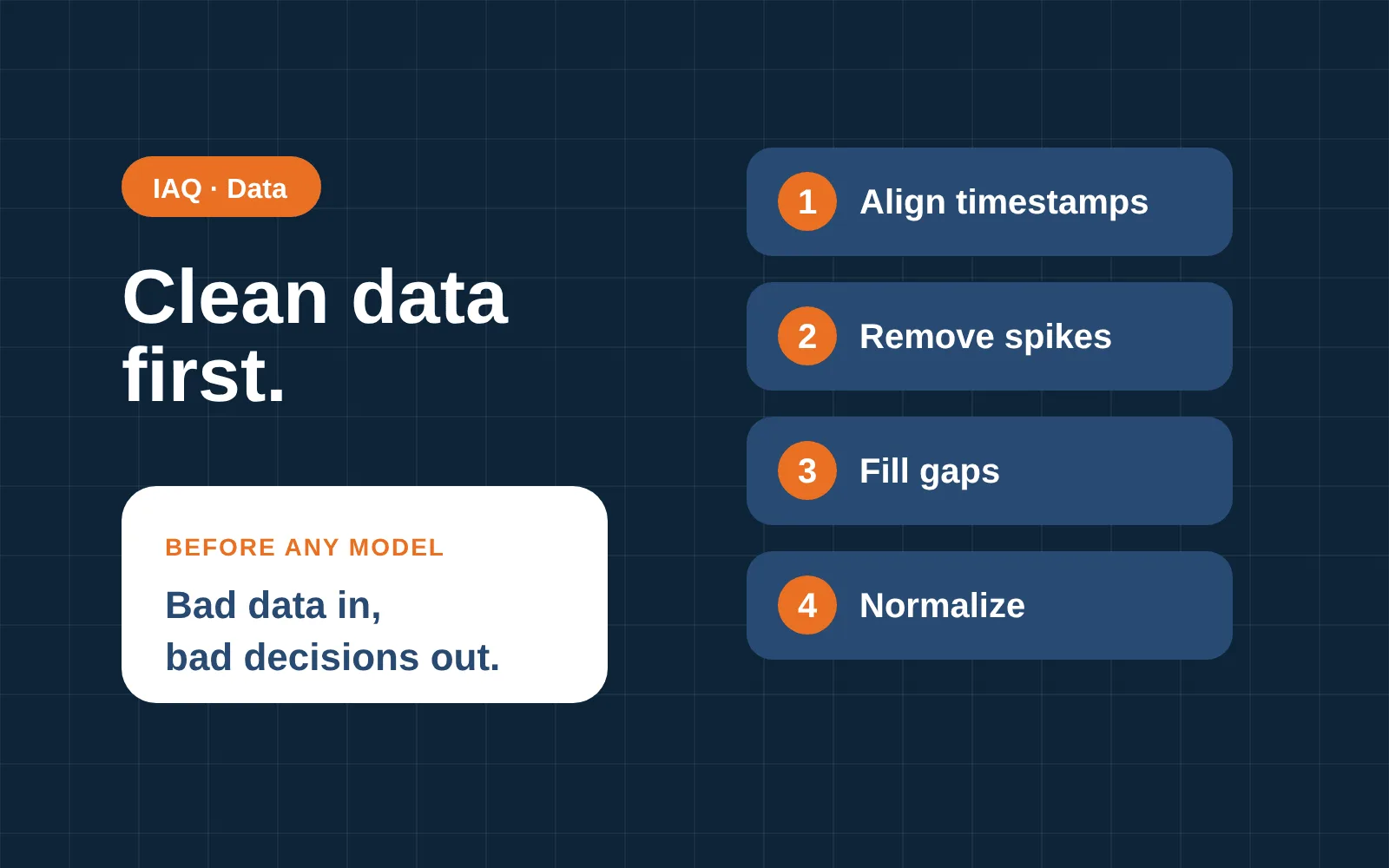
A good pipeline begins with timestamps, so that every source follows the same timeline. Next comes cleaning: sensor spikes, invalid readings and impossible values are removed. Gaps are filled by interpolation or by estimates that take context into account, and values are scaled so that analytics and machine learning treat them consistently.
Turning data into signals
Clean data is still not useful data. Features such as hour of day, day of week and occupancy trends capture recurring patterns. Lagged values and the rate of change show whether a room is improving, getting worse or becoming unstable. Those signals are what IAQ models and HVAC optimization actually work with.
Same steps in training and in the building
The preparation has to be identical during model development and in live operation. If the scaling or the feature logic differs between the two, the results stop being reliable.
Poor data means late action, wasted HVAC energy and complaints that keep coming back. Good data gives you faster detection and a better chance of finding the root cause.
Where Nomestic comes in
Nomestic takes room-level sensor data through these steps, finds ventilation problems, points to likely causes and turns them into actions with verified results.