Technology
Real-time building management with cloud technology
In a cloud-connected building you see issues as they happen and can act before they grow. What the cloud changes for HVAC and indoor air quality.

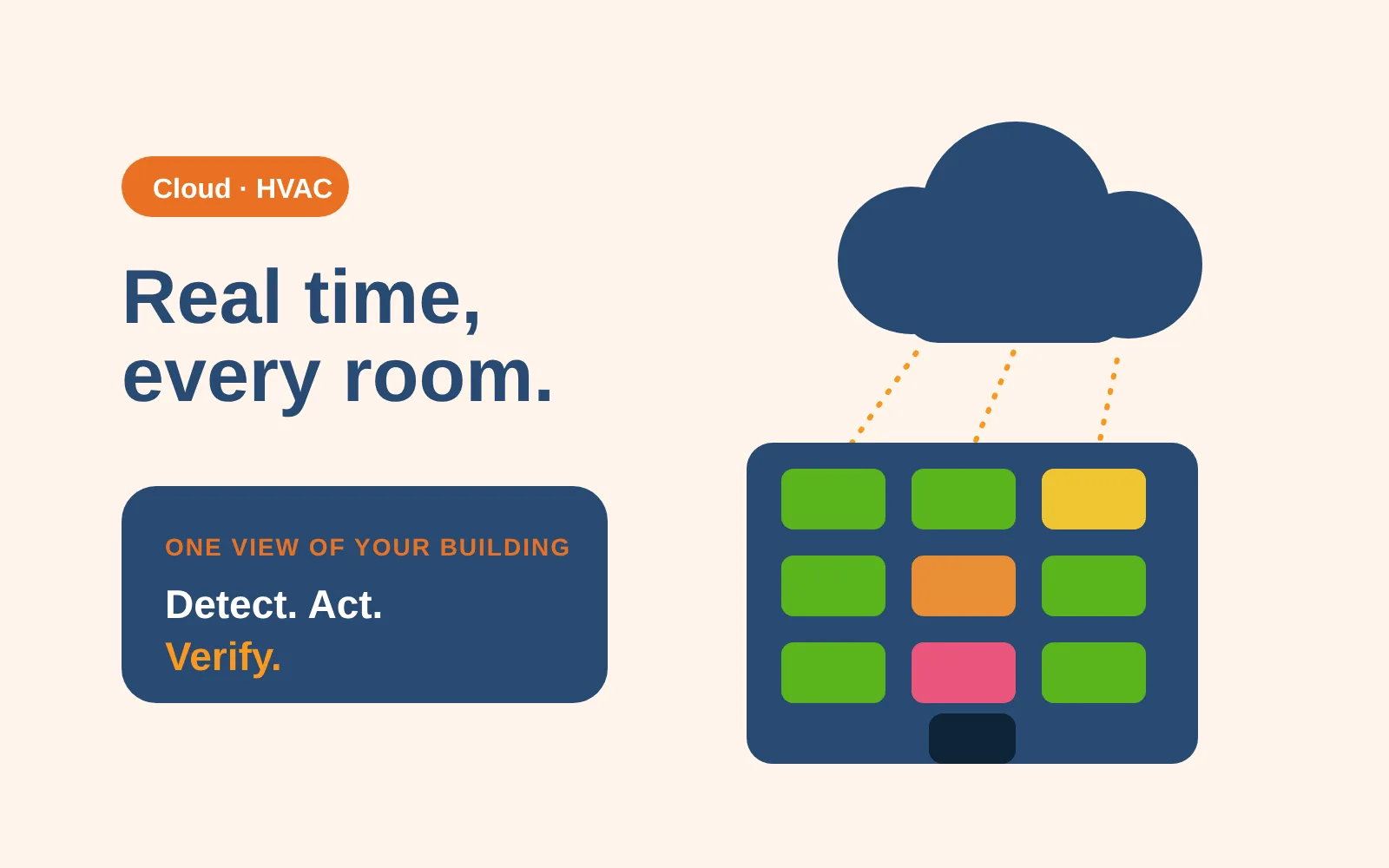
Modern buildings produce more data than ever, but data alone does not improve performance. What cloud-based building management changes is that you see issues as they happen, understand them and act before they grow.
Picture starting your day and already knowing which rooms had high CO2 overnight, where the HVAC ran longer than needed and which zones used more energy than expected. Cloud-connected buildings can do that today.
Why the cloud matters
A traditional building management system (BMS) usually sits on site and reacts to problems instead of anticipating them. Insights arrive late, there is little history to analyze and you cannot compare one building with another.
A cloud platform keeps everything in one place:
- Live monitoring of indoor air quality and HVAC performance
- Data from several buildings and locations side by side
- Long-term storage of how each building behaves
- Quicker detection of anomalies and inefficiencies
Buildings change by the hour, so that continuous view matters.
Security
The first question is always whether it is safe to connect a building to the cloud. Cloud systems use end-to-end encryption, role-based access control and continuous monitoring for threats. Set up properly, they are often more secure than old on-premise systems.
From data to action
Once buildings are connected, the data starts to pay off. Teams can see how indoor air quality changes over time, how outdoor conditions affect indoor comfort and where energy use and HVAC behavior follow a pattern. They can spot over-ventilation, under-ventilation and unstable control, and prevent problems instead of waiting for complaints.
The next step is control: adjusting ventilation to real-time occupancy and indoor air quality, cutting unnecessary HVAC runtime, balancing comfort, health and energy use, and heading off indoor air quality problems before people notice them.
Where Nomestic fits
Many platforms stop at dashboards. Ours turns the cloud data into actions and checks the results. It combines room-level indoor air quality monitoring, predictive analytics, fault detection and diagnostics (FDD) and workflows with verification. Building teams can catch ventilation problems early, find the root cause instead of treating symptoms, fix it in a targeted way and verify that the fix worked. None of it needs BMS integration, which makes rollout faster in existing buildings.