Regulation
EPBD indoor environmental quality monitoring: what the May 2026 date means
Article 13 says building automation systems must be able to monitor indoor environmental quality by 29 May 2026. Who that covers, how it reaches buildings, and what the text leaves open.

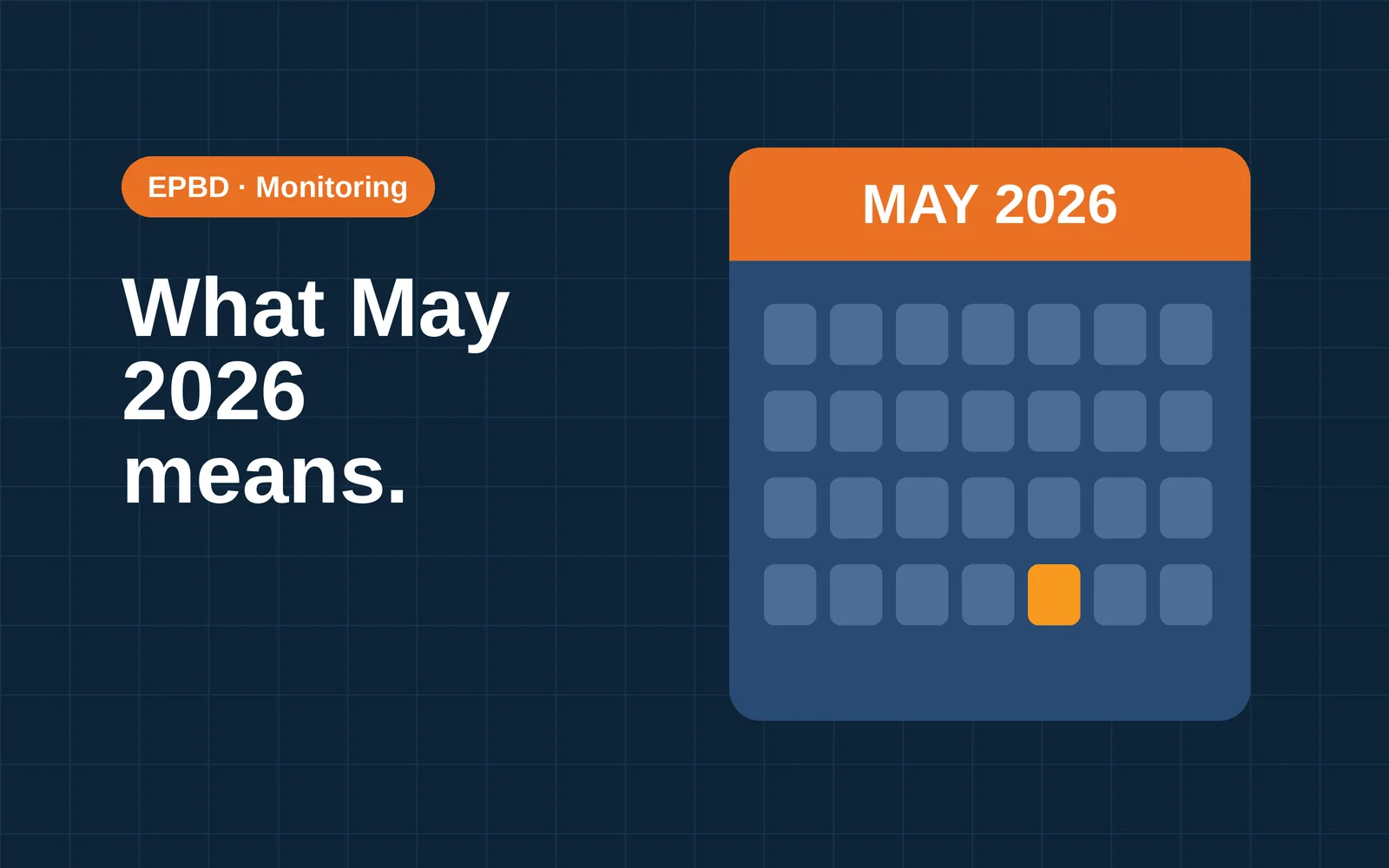
Under the energy performance of buildings directive (Directive (EU) 2024/1275), building automation and control systems (BACS) must be capable of monitoring indoor environmental quality by 29 May 2026. That is the whole requirement in Article 13(10)(d). It does not say that every non-residential building must monitor indoor air from that date. It applies to the systems that Article 13(9) requires, and it reaches a building through national law.
What the energy performance of buildings directive says in Article 13
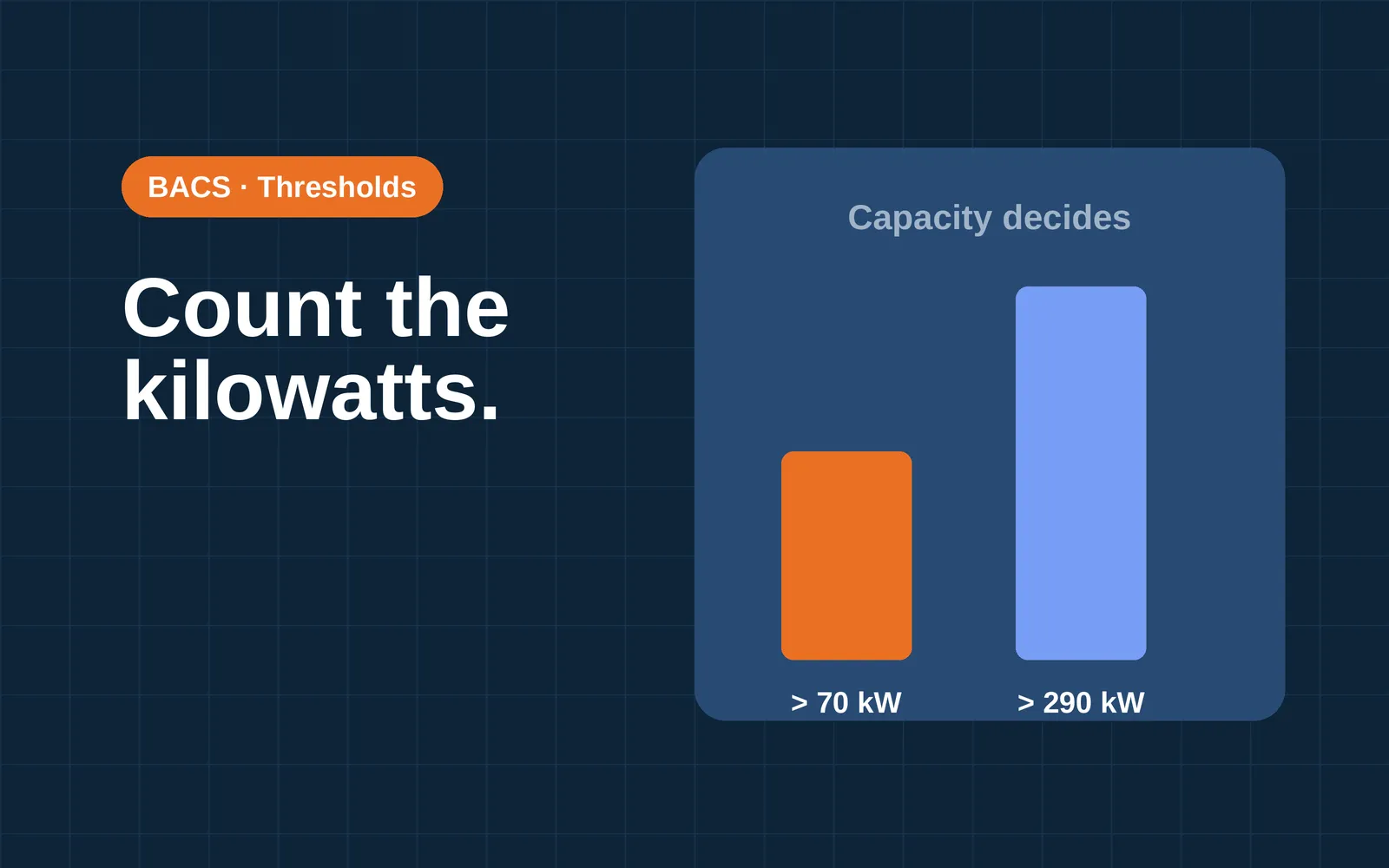
Article 13(9) tells Member States to lay down requirements so that, where technically and economically feasible, non-residential buildings are equipped with building automation and control systems. There are two tiers: systems with an effective rated output over 290 kW by 31 December 2024, and over 70 kW by 31 December 2029. The output counts heating systems, air-conditioning systems, and systems for combined heating and ventilation or combined air-conditioning and ventilation.
Article 13(10) then says what those systems shall be capable of (wording from the English copy on LawPlayer; the Official Journal text prevails):
- (a) continuously monitoring, logging, analysing and allowing for adjusting energy use;
- (b) benchmarking the building's energy efficiency, detecting losses in efficiency of technical building systems, and informing the person responsible for the facilities or technical building management about opportunities for energy efficiency improvement;
- (c) allowing communication with connected technical building systems and other appliances inside the building, and being interoperable with technical building systems across different types of proprietary technologies, devices and manufacturers;
- (d) by 29 May 2026 monitoring of indoor environmental quality.
The word "continuously" is in point (a) and refers to energy use. Point (d) says only "monitoring of indoor environmental quality".
Who the 29 May 2026 date applies to
The date is a capability date for the systems that Article 13(9) of the energy performance of buildings directive requires. Whether it reaches a particular building depends on three facts:
- the building is non-residential
- the rated output of its heating and air-conditioning systems is above the kW threshold in the national text (290 kW or 70 kW in the Directive)
- the national or regional law that applies Article 13(9) covers the building, and equipping it is technically and economically feasible
Member States had to notify their national transposition of the energy performance of buildings directive by 29 May 2026. On 15 July 2026 the European Commission sent letters of formal notice to all 27 because they had not fully notified it. Ireland wrote the indoor point into its definition of a BACS in S.I. No. 642 of 2024, for the purposes of Regulation 5(c) of its 2021 energy performance regulations. Germany's section 56 GModG lists monitoring of indoor climate quality ("Raumklimaqualität") among the system functions, with a 70 kW threshold and a 2029 date. The country overview has the detail.
Other places the Directive mentions indoor air
Article 13(5) is a separate duty. Member States shall require non-residential zero-emission buildings to be equipped with measuring and control devices for the monitoring and regulation of indoor air quality, and existing non-residential buildings when they undergo a major renovation, where technically and economically feasible. Article 13(4) asks Member States to set requirements for adequate standards for indoor environmental quality in buildings.
Point (d) covers monitoring only. Adjusting ventilation in response to what is measured is not required by that point. The word "regulation" appears in Article 13(5), for zero-emission buildings and renovated ones, and point (a) of Article 13(10) speaks of allowing for adjusting energy use.
Article 23(7) attaches an exemption to Article 13(10). Buildings that comply with Article 13(10) or (11) shall be exempt from the requirements in Article 23(1), which sets regular inspections of the accessible parts of heating, ventilation and air-conditioning systems with a rated output over 70 kW.
What the text leaves open
Article 13(10)(d) names no parameters. The definition of indoor environmental quality in Article 2 gives examples only: an assessment of conditions inside a building that influence the health and wellbeing of occupants, based on parameters such as temperature, humidity, ventilation rate and presence of contaminants. Neither text says which parameters must be measured, how often values must be recorded or whether results must be shown to occupants, and neither sets limit values or sensor requirements. Article 13(4) leaves it to Member States to set requirements for indoor environmental quality standards.
The Commission adopted a package of 13 guidance documents on 30 June 2025, one of them on technical building systems, indoor environmental quality and inspections (Articles 13, 23 and 24). This article read it only through REHVA's summary. The summary's table, which serves design, commissioning, monitoring and inspection, puts thermal comfort (operative temperature, air temperature, air velocity, relative humidity) and indoor air quality (ventilation rate, CO2, PM2.5, formaldehyde, nitrogen dioxide, radon, carbon monoxide) in the minimum scope. Per its footnotes, formaldehyde, nitrogen dioxide, radon and carbon monoxide apply where relevant to national, regional or local health priorities or specific issues, and continuous PM2.5 monitoring may only be needed if outdoor levels exceed the EN 16798-1 guidelines. Lighting and acoustics are optional. REHVA links the monitoring use to Article 13(5) and does not mention Article 13(10).
A model regulation of January 2025 by the Nordic Ventilation Group, REHVA and Eurovent shows what a national text could say. Its section 6.2 would require new non-residential buildings to have BACS that monitor indoor air quality and temperature in continuously occupied spaces. Its explanatory report names CO2, temperature and relative humidity as the parameters, and its section 6.7 adds PM2.5 for zones where outdoor air intakes have no filters. It is a model text, not law.
Nomestic measures indoor climate room by room (CO2, temperature, humidity and more) and works with or without a building management system. Nothing in the existing HVAC gets replaced, and the wireless, battery-powered devices take minutes per room. Room-level measurement of this kind helps with compliance where national law asks for indoor monitoring; see the ClimateIQ platform and the Airsight CO2 Monitor.