Regulation
ESG reporting for buildings: what data you actually need
ESG reporting for buildings comes down to metered energy, floor area and emission factors. What ESRS E1, the EU taxonomy, GRESB and CRREM ask for, and where indoor data fits.

ESG reporting for buildings rests on a short list of building data: metered energy by carrier, floor area, the emission factors applied to that energy, and a record that shows change over time. The frameworks ask for it in different ways, but the raw material is the same. Indoor environment data appears in far fewer places than energy data, as the sections below show.
This is a summary of named sources as of the dates given, not legal advice. Scope depends on the company and the country, and the revised ESRS and the taxonomy revisions described below were still pending in the sources cited.
ESG reporting under CSRD and ESRS E1
ESRS E1 is the climate standard used for reporting under the EU's Corporate Sustainability Reporting Directive (CSRD). Two of its disclosure requirements cover energy consumption and mix, and gross Scope 1, 2 and 3 greenhouse gas emissions. In EFRAG's draft of the revised standard (dated November 2025), paragraph 25 asks for total energy consumption in MWh related to the undertaking's own operations, split into fossil, nuclear and renewable sources, and paragraph 29(b) asks for Scope 2 emissions on both a location-based and a market-based basis. The draft numbers the two requirements E1-7 and E1-8; in the original standard they are E1-5 and E1-6. The revised ESRS adopted on 3 July 2026 may word and number these paragraphs differently.
The draft asks for totals for the undertaking's own operations, and the text of those two requirements does not mention buildings or indoor environment. As general reasoning, buildings matter because their meters and invoices are where the totals come from: gas burned on site is Scope 1, and purchased electricity and heat are Scope 2.
Scope and dates have changed. Dechert's September 2026 summary of the Omnibus I Directive says the CSRD covers EU undertakings with an average of more than 1,000 employees and net turnover above EUR 450 million, for financial years starting 1 January 2027, and that small and medium-sized undertakings are out of scope. The Commission adopted a delegated act with revised ESRS on 3 July 2026. EY's note of 23 July 2026 describes it as subject to scrutiny by the European Parliament and the Council, expected to enter into force on 10 November 2026 if no objection is raised, with mandatory use from financial year 2027. For financial year 2026, EY says entities can keep the original ESRS, apply the revised ones early, or use the original with selected reliefs. The status should be checked against the Official Journal before any ESG reporting process is built on it.
What the EU taxonomy asks of an existing building
The EU taxonomy classifies economic activities against technical screening criteria. For acquisition and ownership of buildings (activity 7.7 in the climate delegated act, Delegated Regulation (EU) 2021/2139), a European Commission presentation (a file uploaded in March 2022) gives two routes for a building constructed before 1 January 2021: at least EPC class A, or a place in the top 15% of the national or regional building stock by operational primary energy demand, shown with adequate evidence. For large non-residential buildings, which the presentation defines as those with heating, combined heating and ventilation, or air-conditioning systems above 290 kW effective rated output, the criterion adds that the building is efficiently operated through energy performance monitoring and assessment. The presentation does not say what monitoring would satisfy that wording.
Two changes are worth tracking. Jones Day (December 2025) reports that a simplified delegated act adopted on 4 July 2025 means a company outside real estate has no reporting obligation for owned buildings unless acquisition or ownership of buildings amounts to 10% or more of its revenue, CapEx or OpEx. Separately, Nordea's note of 25 March 2026 on the Commission's draft revisions to the climate delegated act says feedback was open until 14 April, application is planned from 1 January 2027, and one proposal would treat an existing building as making a substantial contribution if its primary energy demand has fallen by at least 60% within the past ten years. Those were drafts at the time of the note, and the final text may differ. Why an EPC class and measured use can differ is covered in Why a good energy label does not tell you how well a building runs.
What GRESB and CRREM ask for
GRESB's 2025 Real Estate indicator summary lists energy consumption (EN1), GHG emissions (GH1), water use (WT1) and waste management (WS1), each with a matching external review indicator (MR1 to MR4). It also lists tenant health and well-being indicators (TC5.1 program, TC5.2 measures). The summary gives the indicator titles and does not say which measures count. The words indoor, air quality, thermal comfort and ventilation do not appear in it.
CRREM works from actuals. Its pathways tool takes metered energy consumption in kWh per m2 and year and gross internal area for each asset, and returns year-by-year energy and carbon intensity limits. The CRREM misalignment year is the projected year when a building's performance crosses its pathway. CRREM also uses a whole-building approach that covers landlord and tenant areas.
Where indoor environment data enters
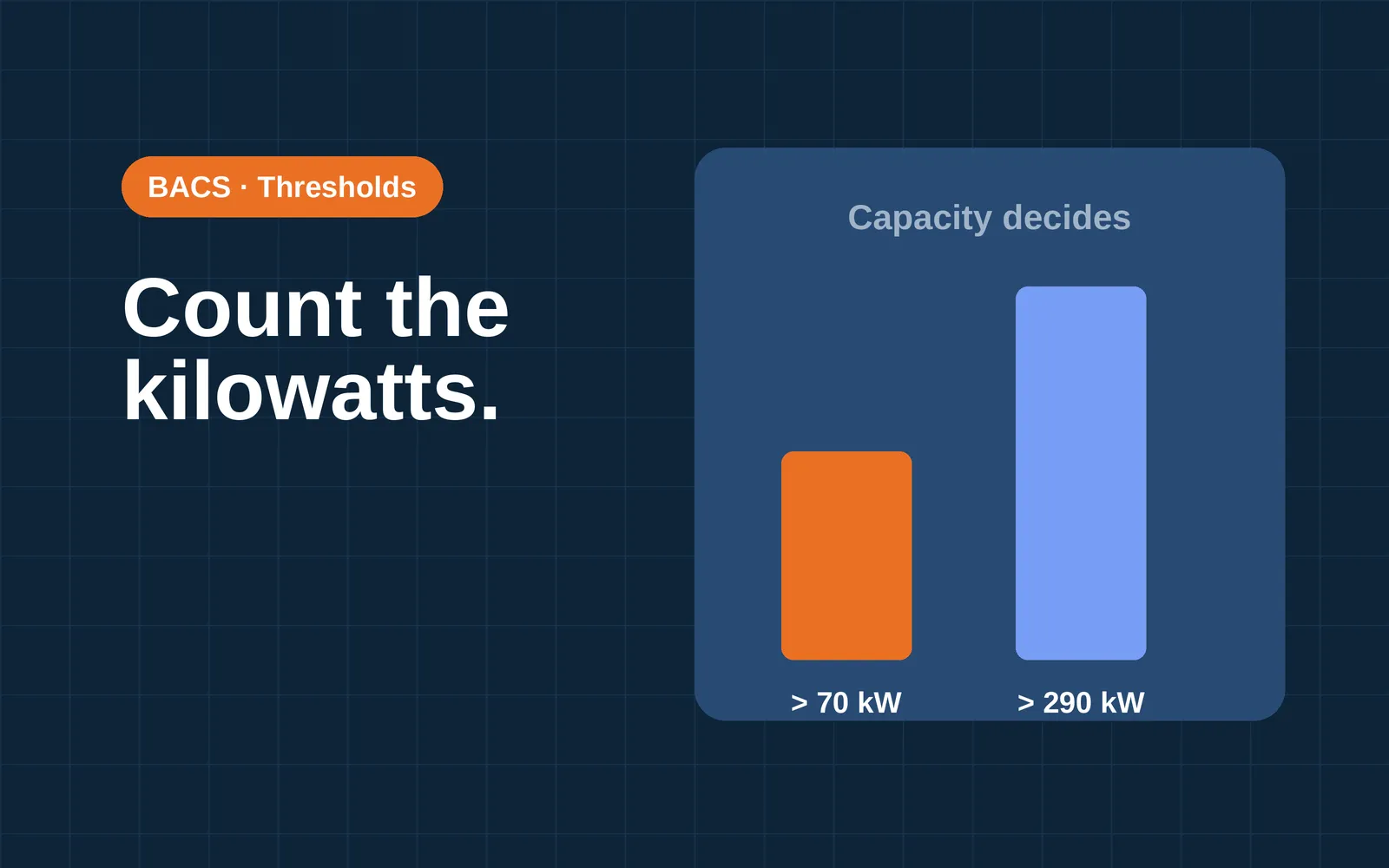
The clearest EU-level link is in the building automation rules. Article 13(10)(d) of Directive (EU) 2024/1275 says building automation and control systems must be capable of monitoring indoor environmental quality by 29 May 2026. Article 13(9) requires non-residential buildings with systems over 290 kW to be equipped with such systems by 31 December 2024, and those over 70 kW by 31 December 2029, where technically and economically feasible. National law decides the details. Article 2(66) defines indoor environmental quality through parameters such as temperature, humidity, ventilation rate and contaminants. The country detail is in EPBD indoor environmental quality monitoring: what the May 2026 date means.
This next point is a practical view, not a rule from any framework. Room-level records help explain the energy numbers. When consumption falls after a change, CO2, temperature and humidity records show whether the saving came from better control or from rooms getting less air. See Room-level data: the missing layer in most buildings.
A short list of building data to keep
No single framework asks for all of this. The list is a practical summary, not a requirement from any source named here.
- Metered energy by building and by carrier (electricity, gas, district heat), with the meter or invoice it came from.
- Gross internal area per building, and the split between landlord and tenant areas.
- The emission factors used, with the year each applies to.
- A list of buildings and months with no meter data, so gaps are visible before an auditor finds them.
- Before and after records for each efficiency measure, taken from the same meters.
- Indoor environment records (CO2, temperature, humidity) for the rooms where monitoring exists.
Nomestic measures indoor climate room by room, including CO2, temperature and humidity, and works with or without a building management system (BMS). Savings are verified by comparing measured data before and after a change. More on the ClimateIQ platform.